The dropper bottle is often the first physical touchpoint a customer has with your skincare or essential oil brand. Long before anyone uses a single drop, the packaging signals quality, care, and intent. In the luxury skincare and essential oil industry, that first impression decides whether a shopper pauses at the shelf or scrolls past online.
Premium packaging is a revenue driver, not a cost center. Strong shelf presence lifts perceived value, and secure, controlled dispensing builds the trust that earns repeat purchases. This guide gives you a clear design process, from brand identity and plastic & glass dropper bottle selection to shapes, finishes, closures, and labels. Along the way, you will see how Lisson supports brands with custom luxury bottles and tailored dropper applications.
Key Takeaways
-
Define your brand identity first. This guides every packaging choice and keeps your design consistent.
-
Choose the right material for your price tier. Glass feels luxurious and protects sensitive formulas. Thick-wall PETG resists breakage and saves shipping costs.
-
Pick a bottle shape and size that match your product. Small, heavy bottles signal potency and precision for expensive actives.
-
Design details like closures and labels improve daily use. Precise droppers and ergonomic caps build customer trust and loyalty.
-
Use sustainable packaging to build credibility. Recycled materials and refill programs appeal to eco-conscious buyers and encourage repeat purchases.
Define Brand Identity for Skincare Packaging
Your brand identity sets every design decision that follows. Before you compare materials or finishes, you must know where your brand sits in the market and what your buyers expect. This foundation keeps your packaging coherent and credible.
Set Positioning and Price Tier
Positioning shapes material and finish choices. A masstige brand can succeed with thick-wall plastic and clean label printing. An ultra-luxury skincare brand needs heavier glass, refined closures, and finishes that feel substantial in the hand. Your price tier tells suppliers how much room you have for decoration, and it tells customers what standard to expect.
Four key considerations guide any custom dropper bottle design:
-
Target audience
-
Product compatibility, with the bottle, dropper, and closures designed for optimal performance with the intended product, such as essential oils or skincare serums
-
Environmental impact, from material choice to packaging and shipping
-
Overall brand image
Treat these four as a checklist. A gap in any one of them weakens the whole design.
Map Target Customer Expectations
Premium buyers judge packaging on sustainability and functionality at the same time. The table below summarizes what they look for.
|
Expectation Area |
Target Customer Expectations |
|---|---|
|
Sustainability |
Eco-friendly solutions such as refillable pods, biodegradable or plant-based materials, and minimalist designs that use fewer materials |
|
Functionality |
Easy, efficient use through precise droppers, easy-to-use pumps, and travel-friendly sizes |
|
Demographic Nuance |
High-end consumers may prefer elegant glass, while eco-conscious buyers seek recycled materials |
Transparency matters as much as the material itself. Buyers reject vague green claims and want measurable impact, including recycled content, refill systems, and clear environmental data. Minimalism now means purposeful design: ergonomic shapes that are easy to hold and dispense, plus labels that educate rather than decorate.
Hygiene and accessibility also drive decisions. Shoppers increasingly favor formats they perceive as cleaner, and roughly 60% believe brands should make packaging easier for everyone to use. Convenience often outweighs sustainability at the point of purchase, so balance both. Strong bespoke skincare packaging answers these expectations openly, and that honesty builds the trust behind bespoke beauty packaging that customers remember.
Choose a Plastic & Glass Dropper Bottle
Material choice decides how your product feels, travels, and sells. Lisson supplies each option below, so you can match the material to your positioning rather than compromise.
Glass Boston Round bottles offer excellent chemical resistance for sensitive skincare formulations. Concentrated actives and pure essential oils demand an inert container, and glass delivers that protection without reacting to the formula. Glass also carries weight that shoppers read as quality. An equivalent PET bottle weighs roughly three to five times less, and consumers treat that difference as a signal of value. For fragrance, cosmetics, and premium food categories, this perceived premium feel alone justifies the higher material cost of glass over PET.
A 2015 study found that participants rated food products packaged in glass as more pleasant than identical products in plastic. Because glass tends to cost more, it conveys a premium experience through look, feel, and weight — an attribute considered essential for luxury beverages and products aiming for a sophisticated image.
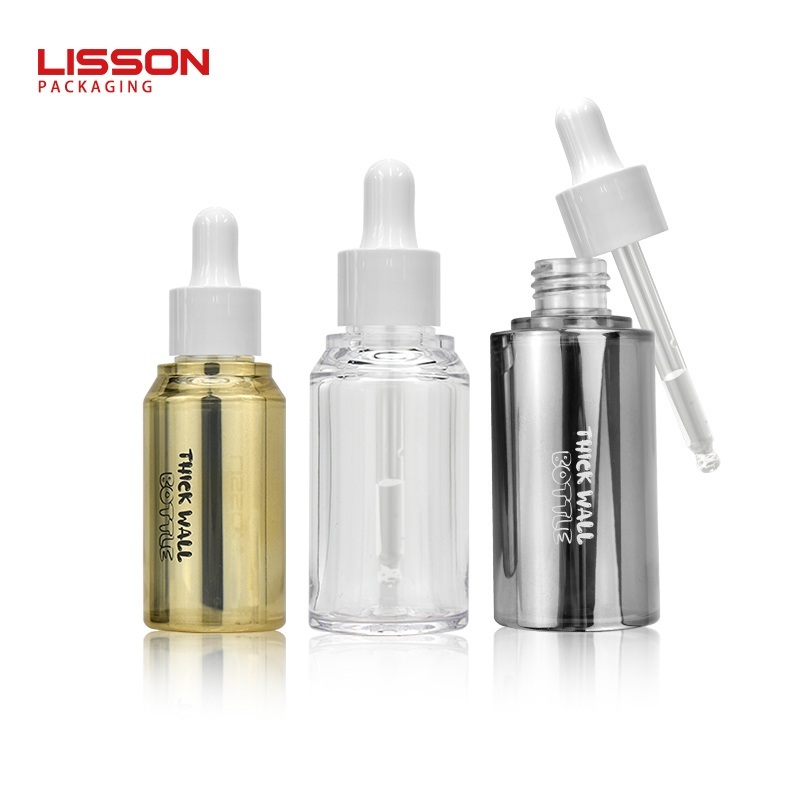
HDPE and PET remain lightweight and durable, yet they generally read as less premium for dropper packaging. HDPE looks clean and clinical. PET shows glass-like transparency, but it turns hazy in heavy sections. Position Thick Wall PETG as the luxury plastic bridge between the two worlds.
Thick Wall PETG Dropper Bottles
Thick wall PETG dropper bottles solve the breakage problem that follows glass through global logistics. PETG flexes and absorbs shock, so shipments arrive intact and damage claims fall. Heavy-wall construction restores the weight of luxury that buyers want, while saving significant international shipping costs. Light transmission reaches 85–88% under ASTM D1003, and thick walls hold optical clarity where standard PET clouds over. Notched Izod impact strength runs 2.0–3.0 ft-lb/in under ASTM D256, far above the 20–30 J/m that PET manages. The material also resists stress cracking from oils, surfactants, and fragrances, and its chemical inertness protects actives like Vitamin C and peptides. Excellent surface tension accepts soft-touch matte, 3D hot stamping, and inner-spraying without pre-treatment.
Eco-friendly Bamboo Glass Dropper
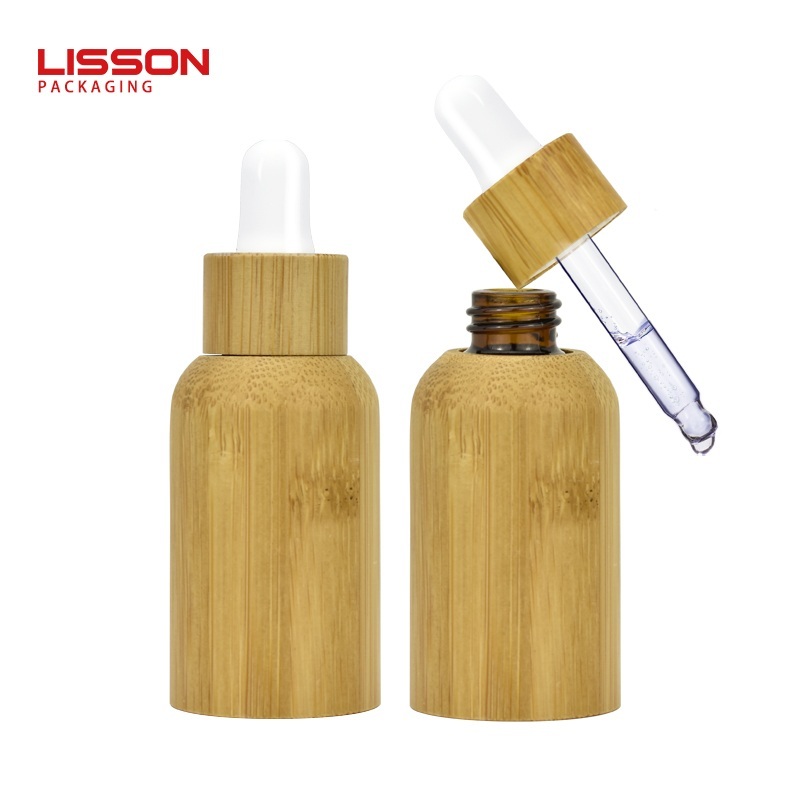
An eco-friendly bamboo glass dropper signals sustainability before a customer reads a single claim. Natural bamboo reads instantly as eco-conscious and luxurious, and visible grain reinforces authenticity. Bamboo grows quickly, biodegrades without microplastics, and visibly tells your environmental story. The glass inner plus bamboo outer format pairs chemical safety with a warm, natural look. Tawny amber glass bottles with wooden droppers strengthen an organic image, and the biodegradable wood top matters to shoppers who think about post-use disposal. Pair the format with secondary eco-friendly packaging for a cohesive green impression.
Select Shape and Size for Your Custom Essential Oil Bottle
Shape and capacity carry meaning before a customer reads your label. Both decisions belong to your custom essential oil bottle strategy, and both influence how shoppers judge potency and price.
Bottle Shapes That Signal Value
The height-to-diameter ratio of your bottle design shapes perceived value. Tall, slender profiles read as elegant and precise. Squat, wide forms read as practical and economical. In prestige beauty, physical glass weight and proportion work together to justify the retail price. Thicker molded bases add heft, and consumers subconsciously link that weight to luxury and high performance.
Choose a Boston Round silhouette for classic apothecary appeal. Choose a tapered or square shoulder for a modern, architectural look. Whichever direction you take, keep the neck and shoulder proportional to the body. A custom essential oil bottle with a balanced profile feels intentional in the hand, and that tactile confidence supports a premium position.
Capacities for Serums and Blends
Capacity decisions follow product type and price tier. The table below summarizes standard ranges across common categories.
|
Product Type |
Standard Capacity Range |
|---|---|
|
Essential Oils |
5–30 ml (5–10 ml for premium oils, 30 ml for broader aromatherapy) |
|
Facial Serums |
5–30 ml (30 ml standard for daily use) |
|
CBD Oil & Concentrates |
5–30 ml (30 ml / 1 oz typical) |
|
Cosmetic Oils |
10–30 ml (facial); 50–100 ml (body/multi-purpose) |
|
Hair Serums & Treatments |
50–100 ml |
|
Nutritional Supplements & Herbal Tinctures |
30–60 ml (1–2 oz) |
A 1 oz (30 ml) dropper bottle is a standard container for essential oil blends, holding roughly 500–600 drops of oil. That drop count gives you a practical way to estimate how long one unit lasts.
The bigger-is-better assumption breaks down in prestige skincare. Oversizing can undermine brand credibility, because consumers associate small, weighty glass bottles with potency, precision, and luxury. Expensive actives lose prestige in large 60–100 ml vessels. Potent actives belong in small, carefully engineered containers. Lisson helps you match capacity to positioning, so your custom essential oil bottle communicates the right value at every price tier.
Design Details for Essential Oil Packaging
Colors, Finishes, and Branding
Color and finish turn a plain container into a luxury object. Amber glass blocks UV light and protects light-sensitive essential oils from degradation, and the warm tone reads as apothecary heritage. Sleek, frosted glass bottles suit modern minimalism and soften the look of clear formulas. Your colors, finishes & branding should work as one system, not three separate decisions.
Decoration carries the premium signal. Hot foil stamping adds metallic depth to logos and borders. Soft-touch coatings give a velvety hand-feel that shoppers associate with high-end skincare. UV protection extends beyond the glass itself, so consider protective coatings and opaque label stock for delicate serums. Lisson helps you test each finish against your formula and your price tier before production begins.
Closures and Labels That Fit
Closure choice shapes both daily use and brand perception. Compare the three main options below.
|
Closure Type |
User Experience |
Brand Perception |
|---|---|---|
|
Dropper |
Precise dosing of actives; weighted glass and a slow, controlled draw feel laboratory-grade |
A weighted glass dropper or metalized overshell can lift perceived value dramatically |
|
Pump |
Lockable pumps survive shipping; dispensing closures control release |
Metalized overshells raise perceived value; the pump can become the branding centerpiece |
|
Cap |
Affordable and versatile; child-resistant push-and-turn caps balance safety with single-handed use |
Metal closures offer premium tactile feel; color, material, finish, and even sound signal quality |
"You want your product to exemplify quality, design, service, and professionalism. In fact, the smallest detail could be a malfunctioned product that leaves customers dissatisfied with your brand... But when you invest in the details, you invest in your brand."
Ergonomics decide whether customers return. Low-torque closures reduce twisting force for users with limited hand strength, and larger grips improve handling. One-drop mechanisms release a single precise drop per squeeze, which suits potent serums where overuse irritates skin. Leak-proof dual-seal caps keep essential oil bottles clean, and industry studies show leak-proof packaging reduces spoilage by 45%.
Label material completes the look. Textured paper suits artisanal positioning, while clear BOPP or clear PET creates a no-label look on clear glass. Oil-rich formulas demand oil-resistance testing before you commit, so check staining, ink rub, and adhesive bleed. Lisson sources label stocks that match your finish and your formula.
How Custom Packaging Elevates Your Brand
Raise Perceived Value and Loyalty
Premium glass packaging for aromatherapy and wellness products combines clean design, timeless elegance, and visible quality. Amber glass filters more than 97% of UV wavelengths, which keeps photochemically unstable essential oils intact. Glass overall holds about 63.7% of the essential oil containers market, thanks to unmatched chemical inertness for therapeutic-grade oils. Minimalism, transparency, and tactile finishes then carry that quality into the customer's hands. Clear or frosted glass lets the product speak for itself, and satin matte surfaces create a quiet luxury feel that raises perceived value.
Custom packaging also separates you from competitors in a crowded market. Embossing and debossing highlight your brand name, and theme-based packaging with branding elements makes your identity more recognizable. Product-specific custom boxes distinguish items with different uses, and unique styling makes the range attractive on shelf. Personalized logos and branded features build a strong brand image, and essential oil boxes show the same discipline applies across your line. Design becomes a storytelling tool here. It communicates your values, ingredients, and benefits, and that story builds emotional connection and loyalty.
Build Sustainability Credibility With Lisson
Lisson is your partner for tailored dropper applications and sustainable, eye-catching custom packaging that differentiates brands in a crowded market. The table below shows how Lisson's sustainable packaging options build credibility.
|
Sustainable Packaging Practice |
How It Builds Brand Credibility |
|---|---|
|
PCR (Post-Consumer Recycled) squeeze tubes |
Signals commitment to sustainability and responsible packaging; appeals to eco-conscious consumers; demonstrates regulatory compliance |
|
Sugarcane bioplastic tubes |
Demonstrates environmental responsibility; enhances brand image; positions the brand ahead of evolving regulations |
|
Kraft paper tubes |
Shows commitment to sustainability; eco-friendly packaging differentiates products; customizable design boosts brand recognition |
Lisson extends this thinking to your Plastic & Glass dropper bottle program. Post-consumer recycled glass for primary containers, plastic-free caps in aluminum, cork, or bamboo, and refillable bottle programs all lower environmental impact and drive stronger repeat purchases. Water-based inks and FSC-certified kraft paperboard complete the story. These choices deliver premium luxury appeal without green claims your buyers cannot verify. Ask Lisson for custom luxury packaging solutions that match your formula, your price tier, and your sustainability goals.
Premium dropper bottle packaging is an investment in brand perception, customer trust, and long-term loyalty. It is not just a container. You build that value step by step: define your identity, choose your plastic & glass dropper bottle, then settle shape, finishes, closures, and labels. Thick Wall PETG Dropper Bottles and Eco-friendly bamboo glass dropper formats let you match material to price tier without compromise.
Lisson turns this process into a finished program. You get tailored design, sustainable materials, and premium finishes across every plastic & glass dropper bottle you order. Your packaging then earns the shelf presence and repeat purchases that premium bottles should deliver. Explore custom packaging solutions with Lisson, and let sustainability and luxury work together for your brand.
FAQ
Which material suits a sensitive serum formula best?
Glass Boston Round bottles offer excellent chemical resistance. They protect concentrated actives and pure essential oils without reacting to the formula. Choose glass when formula integrity matters most. Choose Thick Wall PETG Dropper Bottles when you need shatter resistance and lighter shipping weight.
How do I choose between glass and plastic for my line?
Match the material to your price tier. Ultra-luxury brands need the weight and inertness of glass. Masstige brands can use thick-wall PETG and still signal quality. An Eco-friendly bamboo glass dropper suits natural positioning. Lisson helps you weigh cost, durability, and shelf presence before you commit.
What capacity should a serum or essential oil bottle hold?
Most facial serums and essential oil blends ship in 5–30 ml formats. A 1 oz (30 ml) bottle holds roughly 500–600 drops. Small, weighty bottles read as potent and precise. Oversizing can weaken credibility for expensive actives. Match capacity to positioning, not to habit.
Do premium finishes affect product protection?
Yes. Amber glass blocks UV light and protects light-sensitive oils. Hot foil stamping and soft-touch coatings add perceived value. Protective coatings and opaque label stock extend that shield to delicate formulas. Test every finish against your formula before production. Lisson verifies compatibility for you.
How does custom packaging build long-term loyalty?
Premium packaging turns a routine purchase into a ritual. Precise droppers, ergonomic closures, and tactile finishes improve daily use. Refillable programs and recycled materials reward repeat buyers. These details build trust, and trust keeps customers returning to your brand instead of a competitor's shelf.